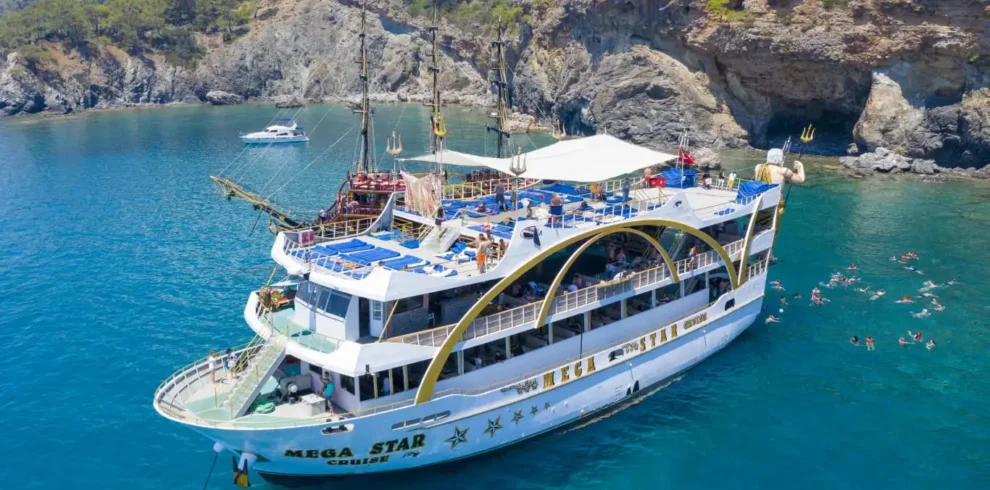
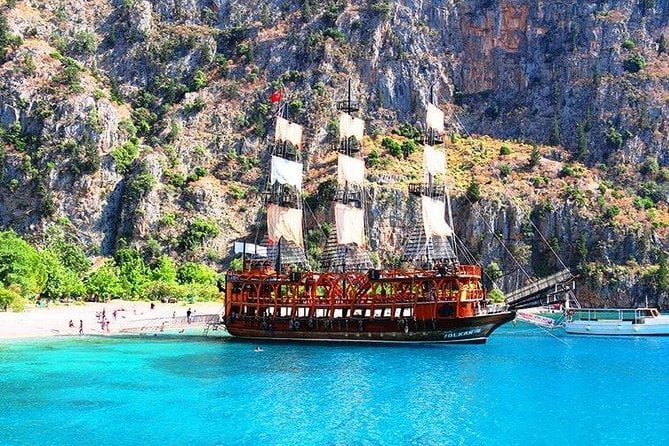
Book Adrasan boat trips and excursions departing daily. Sail to Suluada island, snorkel in hidden coves along the Lycian Coast — hotel pickup included, pay on tour day.
Drift toward the volcanic mineral springs of Suluada or drop anchor in the sapphire silence of Genoese Bay. Our cruises replace loud music with the sound of the breeze, offering a peaceful snorkeling sanctuary.
Adrasan is a small bay 80km south of Antalya, sitting between Olympos and the Gelidonya Cape. The village has no high-rise hotels, no nightclubs, no beach bars playing music at full volume. What it has is one of the cleanest bays on the Turkish coast, a working fishing harbour, and direct access to the Lycian Way walking trail.
Suluada island is the main reason people come to Adrasan by boat. The island sits 2 hours offshore and has no permanent inhabitants, no facilities, just volcanic rock beaches and water that runs turquoise to 15 meters depth. The mineral springs beneath the seabed keep the water unusually clear. Boat trips run daily from Adrasan harbour from May to October.
The coastline between Adrasan and Olympos is part of the protected Olympos-Beydağları National Park. The boat route passes Genoese Bay — a deep inlet with no road access, reachable only by sea. Snorkeling here reveals sea grass meadows and rocky reefs with good visibility most of the season.
All Adrasan excursions include hotel pickup from your accommodation in the Adrasan and Kemer areas. Boat trips include lunch onboard, snorkeling equipment, and return transfer. No upfront payment — you pay on the day of the tour.
Yes! We believe in a trust-based booking system. You can reserve your spot for any Adrasan activity online without entering credit card details. Simply complete your payment in cash (EUR, USD, or TL) on the day of the excursion when you meet our team.
We offer convenient pickup and drop-off services across the entire Adrasan and Olympos region. If you are staying in nearby Çıralı, we can also arrange transfers to ensure you don’t miss out on the boat trips or historical tours.
Often called the “Maldives of Turkey,” Suluada is famous for its white sands and volcanic spring water. Unlike the larger harbor boats, our trips from Adrasan take you to hidden coves and caves that remain untouched, offering a much more intimate swimming experience.
We offer maximum flexibility for our guests. Since no pre-payment is required, you can cancel or change your reservation free of charge up to 24 hours before the tour begins. Just send us a quick message, and we will handle the rest.
Adrasan is a natural protected area, so we recommend bringing eco-friendly sunscreen, a hat, and plenty of water. For the Olympos or Lycian Way tours, sturdy walking shoes are a must. If you’re heading to Suluada, don’t forget your snorkeling gear to fully enjoy the underwater clarity!
drasan is 80km from Antalya city center and 35km from Kemer — about 1.5 hours and 45 minutes respectively by road. The last section of the drive passes through Olympos-Beydağları National Park on a mountain road. Hotel pickup is included from both areas.
Suluada is a small uninhabited island 2 hours by boat from Adrasan harbour. The water around it is exceptionally clear due to volcanic mineral springs beneath the seabed. The trip is a full day — departure early morning, return late afternoon. Lunch, snorkeling equipment, and swimming stops included.
Yes. The Lycian Way long-distance trail passes directly through Adrasan. The day section toward Gelidonya lighthouse is 3-4 hours one way with coastal views and no crowds. No specialist equipment needed for the day section — comfortable hiking shoes and water are sufficient.
Yes. Life jackets are provided on all boat trips. You are not required to swim or snorkel — many people spend the day on deck. The boat anchors in calm, sheltered bays where the water is shallow near the shore.
Genoese Bay is a deep inlet on the Adrasan coastline with no road access — reachable only by boat. The bay has clear water, rocky seabed, and good snorkeling. Most Adrasan boat trips include a stop here. The name comes from Genoese traders who used it as an anchorage in the medieval period.